Keep Your Cool This Summer Without Tripping Breakers
Hot weather hits Castle Rock, the AC kicks on, the dehumidifier starts humming, the fridge and freezer are working hard, and someone turns on the microwave. Then everything goes dark as the main breaker trips. Many homes feel this the first time the temperature really jumps.
Colorado heat, higher elevation, and modern homes full of electronics put a lot of strain on electrical systems, especially if the panel is older or the circuits are crowded. When that demand goes past what a breaker or wire is designed to handle, you get nuisance trips at best and safety risks at worst.
A summer circuit load audit is a simple idea. It is a careful look at what is on each circuit, how much power those things draw, and how your panel and wiring are handling the load when the weather warms up. It often goes hand in hand with smart circuit breaker installation and updates so your system can keep up with how you actually live.
Understanding How Much Power Your Home Really Uses
To talk about loads and panels, it helps to know three basic terms:
- Volts: electrical “pressure,” most homes use 120 or 240 volts
- Amps: how much current is flowing
- Watts: total power, volts multiplied by amps
Your service size, like 100 amp, 150 amp, or 200 amp, is how much current your main panel is built to handle. That does not mean you can run every breaker at full capacity at the same time. It is more like a top limit for your whole house.
Common summer loads can add up fast, such as:
- Central AC or mini-split systems
- Portable AC units or swamp coolers
- Refrigerators and chest freezers
- Well pumps and sump pumps
- EV chargers and power tools in the garage
- Outdoor kitchen outlets and patio appliances
Each of these has a nameplate rating or a label that lists volts, amps, or watts. That number looks small until you start adding them together. Some devices, like AC units or dehumidifiers, run for long stretches instead of in short bursts. These are called continuous loads, and they matter more in hot weather because they keep breakers and wires warm for hours at a time.
There is also a big difference between your total service and your branch circuits. Your home might have enough overall capacity, but you can still overload one 15 or 20 amp circuit in the kitchen or basement long before the whole panel is near its limit. That is why you can trip one breaker even though the main breaker is fine.
Balancing Circuits Before the First Heat Wave Hits
Inside your panel, breakers are laid out on two “legs” of power. In a balanced panel, heavy loads are spread out so each side carries about the same amount. In a crowded or older panel, we often see one side stacked with big summer loads like the AC, microwave, and several kitchen countertop circuits while the other side has mostly lights and light-use rooms.
When one side is doing most of the work, you may notice:
- Breakers on that side tripping more often
- Lights dimming or flickering when the AC or well pump starts
- Certain breakers feeling warmer than others
- A general strain during the hottest part of the day
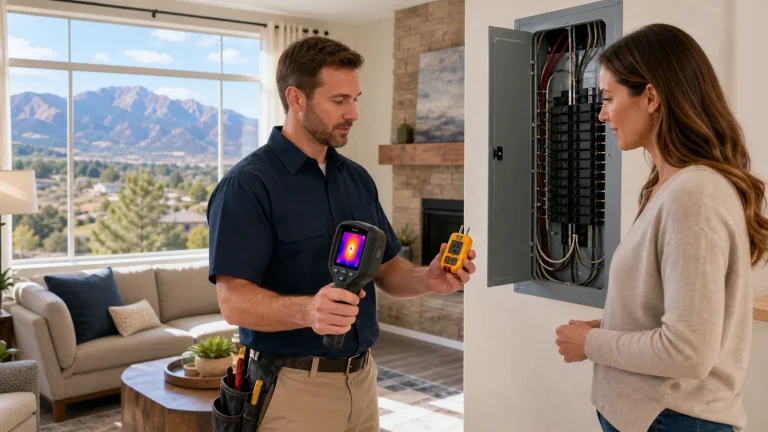
A professional summer circuit load audit looks at how your house is really used. That can include:
- Mapping which outlets, lights, and rooms are on each breaker
- Turning on big summer loads and checking how the panel behaves
- Finding any circuits that often run near or above about 80 percent of their rating
Balancing circuits is often done at the same time as panel work or new circuit breaker installation. It can be especially helpful in homes that have seen several remodels, additions, or DIY projects where new outlets were tied into whatever breaker was close instead of what made the most sense for long-term load.
When You Need Dedicated Circuits for Summer Comfort
A dedicated circuit is simple. One breaker is reserved for one major appliance or one heavy-use area. Some common examples include:
- AC condenser or heat pump
- EV charger
- Hot tub, sauna, or swim spa
- Garage freezer or basement dehumidifier
- Window or portable AC units that run all day
In the Castle Rock area, we see more homes adding high-efficiency AC systems, home offices full of electronics, and outdoor kitchens for summer evenings. Each of these can push old shared circuits too hard. A freezer and a dehumidifier fighting for the same 15 amp circuit, for example, is asking for a mid-July breaker trip.
Electrical code often requires dedicated circuits for certain appliances, and it sets rules for GFCI and AFCI protection in places like kitchens, bathrooms, outdoors, and bedrooms. It is never safe to “fix” tripping by swapping in a bigger breaker on the same wire. That can let the wire overheat before the breaker trips, which is a real fire risk.
A licensed electrician will look at available panel space, total load, wire size, wire condition, and grounding before adding dedicated lines. If the panel is already packed or uses older breakers that do not support newer safety features, we may recommend broader circuit breaker installation work or even a panel upgrade to give you safe room to grow.
Is It Time for a Panel Upgrade or New Breakers?
Panels, like everything else in a home, age. At some point they are no longer a good match for modern summer demand. Signs your panel might be undersized or outdated include:
- Breakers that trip often, even under normal household use
- Breakers that feel warm to the touch or make a buzzing sound
- Lights that flicker when the AC, well pump, or microwave starts
- No open spaces left for new circuits
- Old-style fuse boxes or very old breaker brands
There are different levels of fixes:
- Replacing worn or faulty breakers with new, properly matched breakers
- Adding new branch circuits to spread out loads
- Installing a subpanel, often for garages, shops, or additions
- Upgrading the main service and panel to a larger size, like 200 amps
In some homes around Castle Rock, the existing panel may not support modern AFCI or GFCI breakers in all the places code now calls for them. Some older brands also have known reliability issues and may be better off replaced than repaired.
Professional circuit breaker installation is more than snapping a breaker in place. It includes correct labeling, tightening lugs to the right torque, checking for proper grounding and bonding, and pulling permits so work can be inspected. That way, when the summer load hits, your system is ready to handle it safely.
Schedule Your Summer Load Check Before the Heat Arrives
A summer circuit load audit before the hottest stretch can prevent a lot of stress later. It is a smart time to think about any changes in your home, like a new AC system, an EV charger, a finished basement, or a new hot tub or outdoor kitchen.
Before an electrician arrives, it helps to:
- Make a list of any new appliances or big upgrades in the past few years
- Note which breakers trip and what is running when they do
- Gather any past inspection reports or remodeling notes
- Think about future plans that might need power, like an office or workshop
At Pink Brick Electric, we focus on residential homes in Castle Rock and nearby communities, and we work with homeowners who want their panels, wiring, and circuit breaker installation ready for real summer demand. A thoughtful load check now can help keep your home cool, safe, and steady when the temperature climbs and every circuit in the house is busy.
Get Started With Your Project Today
If your electrical panel is due for an upgrade or you are adding new appliances, we are ready to help you plan a safe and code-compliant circuit breaker installation. At Pink Brick Electric, we take the time to evaluate your home’s needs so your new circuits support your daily life without surprise outages. Reach out anytime through our contact us page, and we will schedule a convenient time to review your project and provide a clear, upfront estimate.