Stay Powered When Summer Storms Hit Woodland Park
Summer storms in Woodland Park can roll in fast. One minute the sky is clear, and the next it is dark, windy, and the lights are flickering. Power can drop without much warning, and it is not always back on as quickly as we would like.
When the power goes out, daily life gets hard in a hurry. Food in the fridge starts to warm up, AC and fans shut off, work laptops lose power, and internet routers go dark. For homes with medical equipment or a well pump, an outage is more than an inconvenience; it can affect comfort, safety, and basic needs. That is why a properly planned generator installation in Woodland Park, Colorado can make such a difference. With the right backup power, your home can stay safe, comfortable, and functional when the grid goes down.
Why Summer Outages Are so Common in Woodland Park
Woodland Park and the surrounding foothills see a lot of active weather in the summer. Thunderstorms often bring heavy rain, lightning, and hail. Strong wind can push over trees or break large branches, which can fall into overhead lines and knock out power.
A few local factors make outages more common, and sometimes slower to fix, than in dense city neighborhoods:
- Frequent lightning strikes that can damage transformers and equipment
- Heavy rain and hail that stress older power lines and hardware
- Tall trees close to lines that are more likely to fall in wind or saturated soil
- Longer feeder lines that stretch through forested, uneven terrain
The elevated terrain around Woodland Park and Teller County adds to the challenge. Lines often run through wooded areas, so crews may need to reach remote spots before power can be restored. At the same time, hotter summer days put more strain on the grid as AC units, fans, and appliances all run at once. That extra demand can raise the chance of brownouts or failures just when you most want your home to stay cool and steady.
Choosing the Right Backup Power for Your Home
There is no one-size-fits-all answer for backup power. The best setup depends on how you live, your home’s layout, and which circuits matter most during an outage.
Portable generators and standby generators both provide backup power, but they work very differently:
- Portable generators sit on wheels, are stored when not in use, and must be rolled out and started by hand
- They usually run on gasoline and are plugged into selected loads or a properly installed inlet and transfer system
- Standby generators are permanently installed outside, connected to your electrical system through a transfer switch
- They usually run on natural gas or propane and start automatically when the power goes out
Some homeowners want whole-home backup so that everything feels almost normal during an outage. Others only need key items, such as:
- Refrigerator and freezer
- Well pump and water treatment equipment
- Furnace fan or boiler controls
- Internet, router, and a few work circuits
- A few lights and general-use outlets
- Medical devices or charging for mobility equipment
Sizing the generator is a careful process. It is not just about adding up the watts printed on labels. Many appliances, such as well pumps and refrigerators, pull extra power when the motor first starts. If those loads stack up at the same time, a small generator may struggle.
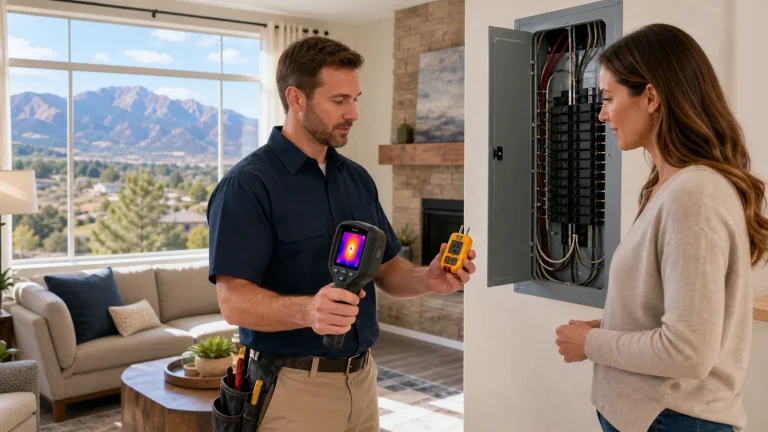
An in-home assessment by a licensed electrician helps in several ways:
- Listing your backup priorities and must-have circuits
- Calculating running watts plus motor start-up surges
- Checking your panel, wiring, and grounding for compatibility
- Helping you avoid a unit that is too small to be useful or so large it never gets properly loaded
What Professional Generator Installation in Woodland Park Includes
A safe, reliable generator setup is more than setting a unit on a pad and plugging it in. It starts with a site evaluation that fits local codes and local weather.
For the physical placement, we look at:
- Safe clearance from windows, doors, and vents for exhaust
- Rooflines and where snow and ice tend to slide off in winter
- Drainage so water does not pool around the unit during heavy rain
- Access for propane or natural gas connections and maintenance
On the electrical side, planning and permitting matter. A licensed electrician will:
- Review your main panel and any subpanels
- Perform load calculations to confirm capacity and balance
- Recommend a transfer switch or load management system that fits your needs
- Handle required permits and inspections so the work meets Colorado and local Woodland Park requirements
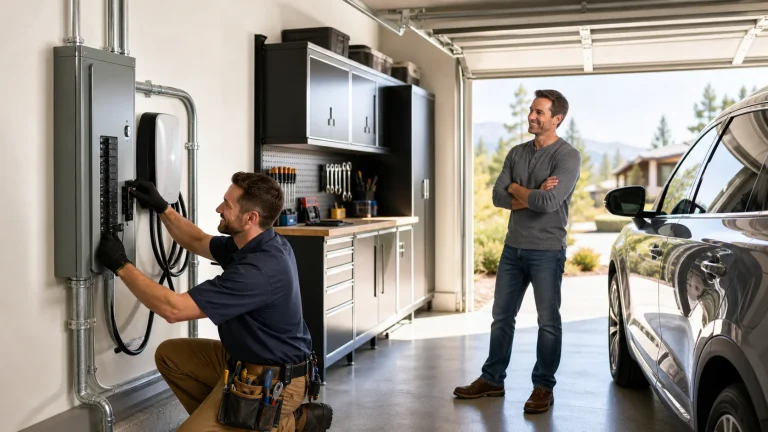
On installation day, the steps typically include:
1. Preparing and leveling the generator pad
2. Setting the generator in place and securing it
3. Running conduit and wiring between the generator, transfer switch, and panel
4. Coordinating with the gas professional for fuel line connection
5. Making final electrical connections and labeling circuits
6. Testing the system under load so it starts, transfers, and shuts down correctly
7. Walking through basic operation, safety, and simple homeowner checks
Safety, Code Compliance, and Long-Term Reliability
Backup power is not something to treat as a weekend DIY project. When generators are tied into a home incorrectly, serious hazards can appear. Backfeeding power into the grid can put utility crews at risk. Undersized or wrong-type breakers can overheat. Poor exhaust placement can raise the risk of carbon monoxide buildup.
Working with a licensed, insured residential electrician helps reduce these risks. Professional installation focuses on:
- Correct grounding and bonding methods for your property
- Properly sized breakers, wire, and conduit
- A transfer switch that cleanly separates the house from the grid during an outage
- Clear labeling so you know exactly what is powered during backup
Long-term reliability also matters. A generator that has not run in months may not start when the storm hits. Routine maintenance and periodic testing before storm season help keep things ready. In Woodland Park, we also keep an eye on local conditions such as altitude, cold snaps that can follow summer rain, and sudden weather swings. Matching the equipment and settings to these realities supports smoother starts and better performance when you need it.
Plan Your Generator Installation Before Storm Season Starts
The best time to plan generator installation is before the severe storms arrive. Early summer is a smart window, since the ground is clear, the weather is more predictable, and you are not trying to make fast decisions in the dark during an active outage.
Planning ahead helps you:
- Take time to think through which circuits really matter to you
- Review different generator and transfer options without pressure
- Avoid delays from equipment backorders during peak storm periods
- Get permits and inspections handled on a normal schedule
At Pink Brick Electric, we focus on safe, code-compliant electrical work for homes in Woodland Park and nearby communities. A thoughtful generator installation can keep your food cold, your water flowing, your work devices running, and your family comfortable when the next storm rolls across the Front Range.
Get Started With Your Project Today
If you are ready to protect your home from unexpected outages, let our licensed electricians handle your generator installation in Woodland Park, Colorado with precision and care. At Pink Brick Electric, we take the time to assess your needs, explain your options clearly, and complete the work safely and up to code. Reach out through our contact us page and we will help you schedule a convenient time to get your project moving.