Protect Your Garage From Overloaded Circuits This Fall
Garage circuits in Monument work hard. By the time fall rolls around, many homeowners are using the garage for storage, projects, space heaters, and battery charging, all on the same few outlets. That is a lot to ask from wiring that may have been put in when garages were used for nothing more than a light and a simple opener.
Garages are especially prone to overloaded circuits. It is common to see older wiring, long runs from the main panel, and many tools and appliances sharing a single breaker. Add in a freezer, a plug-in heater, an EV charger, and a few chargers for power tool batteries, and the load can get risky fast.
Dedicated circuit installation in Monument garages can keep that load under control. With the right layout, you can avoid constant breaker trips, protect your equipment, and lower the chance of overheating and fire. In this article, we will walk through clear signs your garage is overworked, which items really should have their own circuit, and when it is time to have a licensed electrician step in.
Warning Signs Your Garage Circuit Is Overloaded
One of the first red flags is a breaker that seems to have a mind of its own. If you are often walking to the panel to reset a garage breaker, something is not right.
Common overload signs include:
- Breaker trips any time you start a larger tool or plug in a heater
- Breaker trips when more than one big item runs at the same time
- You find yourself “testing” which things can run together without popping the breaker
That breaker is trying to protect you. Constantly resetting it without fixing the problem keeps the circuit running at or near its limit, which is not safe for the wiring or the devices plugged in.
Another warning sign is flickering or dimming lights when tools run. Maybe the overhead lights dip every time the air compressor kicks on, or the shop lights flicker when you start a table saw. That drop in brightness often means a voltage drop, and it is a clue that the circuit is carrying more load than it should. Heavy draw tools and motors usually belong on their own dedicated circuits instead of sharing with lights and other outlets.
You should also pay close attention to heat and smell. If you notice:
- Warm or hot outlet covers in the garage
- Discolored or brown marks on receptacles
- Buzzing or crackling from outlets or the panel
- A faint burning or plastic smell near the panel or garage circuits
Those are urgent warning signs. Heat and smell point to overheating and possible damage inside the wiring or connections. These are not issues to ignore or try to fix on your own. At that stage, the risk of fire is higher, and a licensed electrician needs to inspect the system.
High-Demand Garage Gear That Needs Its Own Circuit
Modern garages in Monument often do a lot more than park a car. Many homeowners run small workshops, hobby spaces, or storage areas that rely on power-hungry gear.
Common high-demand tools and equipment include:
- Table saws and miter saws
- Welders and plasma cutters
- Air compressors and shop vacs
- Large battery chargers for tools and equipment
When you run a saw, dust collector, and shop lights all on one standard circuit, overloads are almost guaranteed. Motors draw extra current when they start, and that spike can easily push a shared circuit over its safe limit.
Appliances are another big piece of the puzzle. Garages often end up with:
- Second refrigerators
- Chest freezers
- Upright freezers
These run for long periods and need steady power. If a freezer shares a circuit with tools, chargers, and heaters, a single trip can shut it off without you noticing right away. That can lead to spoiled food or damage to the appliance. Having these on dedicated circuits keeps them running even if another breaker trips.
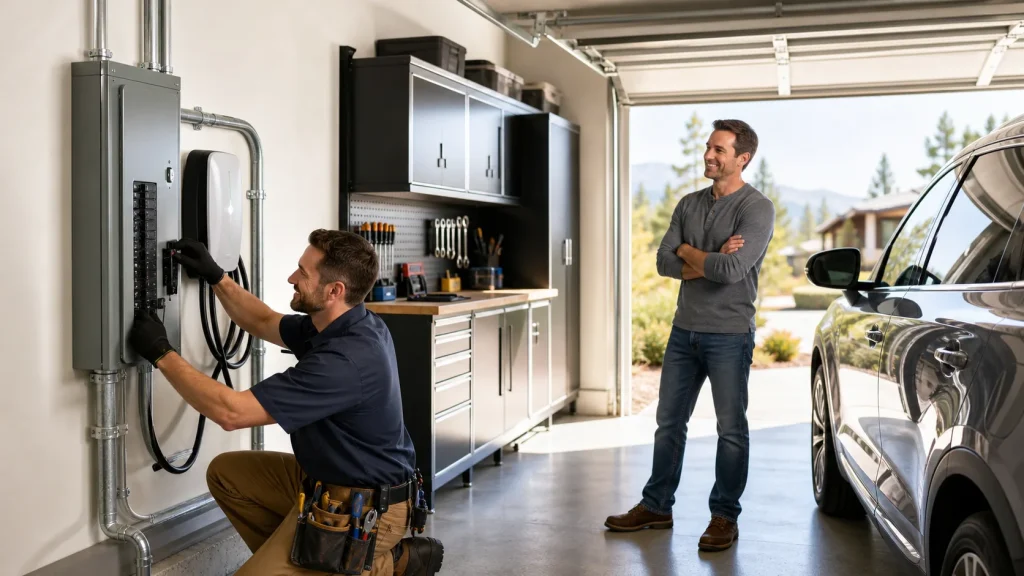
Cold weather brings out one of the biggest draws of all: space heaters. Plug-in heaters pull a large continuous load for long periods. Add in an EV charger or a large battery charging station, and the strain climbs even higher. Many of these items should be on their own dedicated 120V or 240V circuits, sized to the manufacturer’s requirements, so they run safely and reliably.
How Age and DIY Wiring Put Monument Garages at Risk
Many garages in Monument and nearby areas were wired long before today’s loads were common. Back then, builders expected a couple of lights, maybe a garage door opener, and a few light-duty tools. Codes and best practices have changed, but older garages often still have the original wiring and layout.
That older wiring might not be sized or arranged for what you use the space for now. Long circuits with many outlets in a row, shared with other rooms, are common. When you add modern tools, heaters, and chargers, those circuits can quickly reach their limit.
DIY fixes tend to pile on top of that. Homeowners often add:
- Daisy-chained power strips
- Extension cords run from inside the house
- “Temporary” outlet boxes that become permanent
These workarounds are not the same as proper circuit installation in Monument garages. They can hide overloads, create loose connections, and add points where heat can build up. What starts as a quick fix can slowly turn into a fire risk.
Another issue is missing modern safety features. Current codes often call for GFCI protection in garage outlets to reduce shock risk, and AFCI protection in certain areas to help reduce fire risk from arcing. A licensed electrician can look at your panel, wire size, and existing protective devices, then design new dedicated circuits that are both safe and code compliant.
Planning a Safer, More Functional Garage Circuit Layout
A better garage electrical setup starts with a simple step: map out how you really use the space. Take a few minutes to think about:
- What tools and appliances you have now
- Where they sit in the garage
- Which items you use at the same time
- Any future plans, like an EV or more shop equipment
This “map” helps guide how many circuits you need and where outlets and lighting should go. It is much smoother to plan around your real habits instead of guessing.
Separating key loads onto their own circuits makes a big difference. In many garages, it makes sense to give dedicated circuits to:
- Freezers and second refrigerators
- Larger tools and hobby equipment
- EV chargers or future EV-ready outlets
- High-output space heaters or permanent heaters
It also helps to keep lighting on a different circuit than the wall outlets. That way, if a tool or heater ever trips a breaker, you are not left in the dark while holding a saw or standing in the middle of a project.
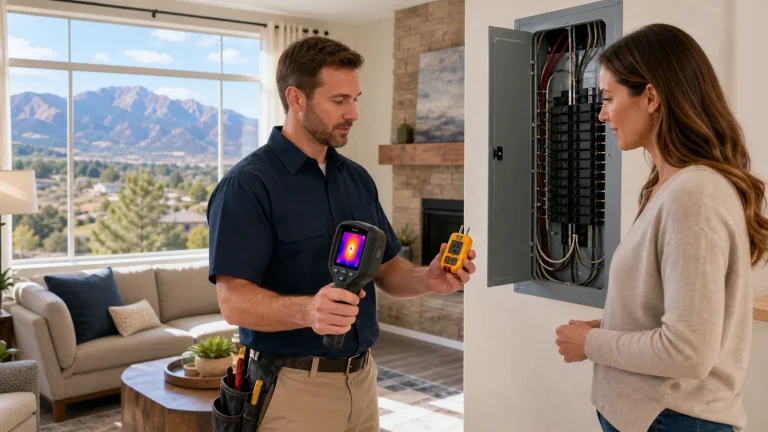
Before new circuits are added, the main panel needs a careful check. An electrician should look at:
- Overall panel capacity
- Open breaker spaces
- How existing loads are spread out
If the current setup is already close to full, options like a garage subpanel, panel replacement, or rebalancing circuits may be needed. Doing this the right way at the panel level keeps the whole system safer and more reliable.
Schedule a Professional Garage Circuit Assessment Before Winter
As weather gets colder around Monument, garages see more use, not less. People plug in heaters, charge more tool batteries, and spend time on indoor projects. That extra load is exactly when weak or overloaded circuits tend to show themselves by tripping or overheating.
Catching and correcting those issues before winter sets in helps avoid mid-season outages and safety concerns. During a typical visit, an electrician will inspect the main panel, test existing garage circuits, and check outlets and lighting for signs of stress or damage. From there, you can talk through how you use your garage now, what you plan to add later, and which dedicated circuits make sense for your space.
At Pink Brick Electric, we focus on code-compliant repairs, fair recommendations, and circuit layouts that match how you actually live and work in your home. If you have noticed breaker trips, flickering lights, or warm outlets in your Monument garage, it is a good sign that a dedicated circuit plan could make your space safer, more reliable, and ready for the coming seasons.
Get Started With Your Project Today
If you are planning upgrades or new equipment, let Pink Brick Electric handle your circuit installation in Monument so everything is safe, reliable, and up to code. We take the time to understand your home or business needs and design circuits that fit your daily use, not just the minimum requirements. Reach out today and we will walk you through options, pricing, and timing that work for your schedule, or contact us to request an appointment.