Stop the Flicker: Understanding Power Quality in Castle Rock
Flickering lights, dimming when the AC starts, and random breaker trips are not just annoyances. They are signs that something is off with your home’s power quality. In simple terms, good power quality means steady voltage, reliable circuits, and lights that stay the same brightness all the time.
When power quality slips, you may notice lights that blink or pulse, TVs or electronics that buzz or shut off, breakers that trip for no obvious reason, or appliances that sound strained when they start.
In this article, we will explain what usually causes these problems in Castle Rock homes, how to tell if the issue is coming from the utility or from wiring and panels inside your home, and why safe, professional electrical troubleshooting in Castle Rock is the best way to protect your house and your devices.
Common Flickering Light Problems Homeowners Notice
Not all flicker is the same, and the pattern tells us a lot. Homeowners often report that all or most lights dim for a second when the AC, well pump, or microwave kicks on. Others notice that one room or one light flickers often even when nothing big turns on, or that flicker shows up more when storms roll through or the wind is strong.
Whole-house dimming when a large appliance starts can point to a heavy load on the service, weak connections at the service or panel, or utility-side voltage dips in the neighborhood.
Random flicker on a single circuit, or only in one room, usually points inside the home, such as a loose neutral or hot wire on that circuit, a worn-out light fixture or switch, or old or damaged wiring from past remodel work.
Seasonal flicker that lines up with late spring and summer storms can be caused by utility lines swaying or getting brief faults, or by lightning nearby affecting the power grid.
Watch for red flags that mean you should stop and get help right away:
- Flickering paired with a burning smell
- Warm or discolored switch plates or outlets
- Buzzing sounds at a fixture, outlet, or the electrical panel
- Sparking when you plug things in
These signs can point to overheating, arcing, or wiring damage that can become a fire risk.
Voltage Drops, Surges, and Their Hidden Costs
Flicker is often a symptom of voltage problems. Here are simple definitions:
- Voltage drop: The voltage slips lower than normal for a short time, often when something big turns on.
- Brownout: The voltage stays lower than normal for a longer period, so lights look dim and some devices may reset.
- Surge: The voltage jumps higher than normal, often due to switching on the grid or nearby lightning activity.
These issues tend to show up more when AC systems are running hard on warm days, when many homes on a street are drawing heavy power at the same time, or when thunderstorms move through the area.
Low or unstable voltage can shorten the life of LED bulbs, cause TVs, computers, and chargers to fail early, and make HVAC systems and refrigerators run hotter and wear out faster.
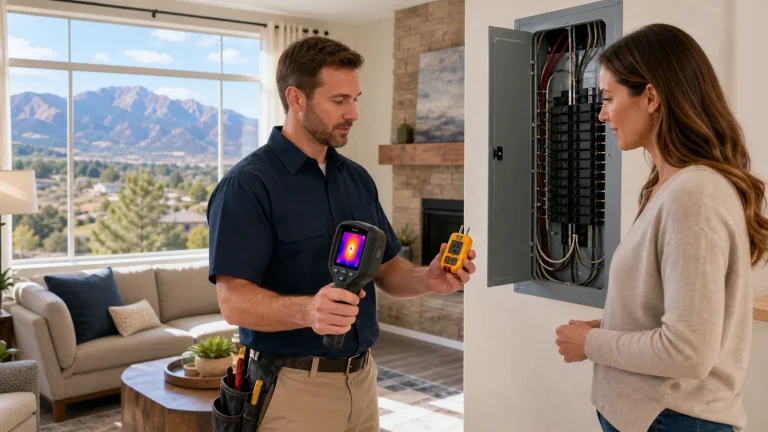
When we are called for electrical troubleshooting in Castle Rock, some of the basic steps we use include:
- Measuring voltage under load at outlets and at the panel
- Checking for loose neutrals, especially at the service and main panel
- Inspecting service connections for damage or corrosion
- Verifying that the panel has enough capacity for the home’s actual loads
These tests help us see if the home is asking for more power than the system can safely deliver, or if there is a bad connection somewhere in the path.
Utility vs. In-Home Problems: How to Tell the Difference
It is helpful to have a simple way to guess where the trouble might be starting.
Signs it could be on the utility side:
- Multiple neighbors notice the same flicker or dimming
- Lights dip across your entire house at the same time
- Problems start right after storms, line work, or other visible utility activity
Signs it is more likely inside the home:
- Only one room or one circuit is affected
- Certain switches always cause a flicker when used
- You see old, mixed, or damaged breakers in the panel
- You know the home has older DIY wiring from past remodels
Responsibility is usually split like this:
- The utility is responsible up to the meter and their service lines
- The homeowner is responsible from the meter into the panel and all wiring, outlets, lights, and equipment inside
In many cases, it helps to have a licensed electrician inspect and document findings before contacting the utility. Clear notes on voltages, times, and what we tested can make any follow-up with the power company go smoother.
Smart Electrical Troubleshooting Steps for Castle Rock Homes
There are safe checks a homeowner can do without opening anything up. Helpful things you can do include keeping a simple log of when problems happen and what was running, noting if storms, wind, or heavy AC use are happening at the same time, trying a different bulb in a flickering light in case the bulb itself is failing, and plugging the same device into another outlet on a different circuit to compare.
Just as important are the things you should never do:
- Do not remove the cover of your electrical panel
- Do not try to tighten live connections or breakers
- Do not work inside junction boxes, outlets, or switches without training and proper safety gear
At Pink Brick Electric, when we handle electrical troubleshooting in Castle Rock, we focus on:
- Asking detailed questions about what you see, hear, and smell
- Measuring voltage and load at key points in the system
- Inspecting the main panel, breakers, and visible wiring for loose or overheated spots
- Explaining what we find in plain language and giving clear repair options
The goal is to solve the root problem, not just silence a symptom.
When an Electrical Panel Upgrade Is the Real Fix
Sometimes flicker and voltage problems trace back to a panel that is simply too small or too tired for modern life. Older homes were not built with EV chargers, hot tubs, home offices, and large AC units in mind. As cooling season ramps up, all those loads can push a 60- or 100-amp panel past its comfort zone.
Warning signs that a panel upgrade may be worth discussing include:
- Breakers that trip again and again, even with normal use
- Very few or no open breaker spaces left
- A panel that feels warm to the touch or makes buzzing sounds
- Breakers that look mixed, very old, or visibly damaged
- Rust, corrosion, or stains inside or around the panel
A properly sized, modern panel can:
- Provide more stable voltage to the whole house
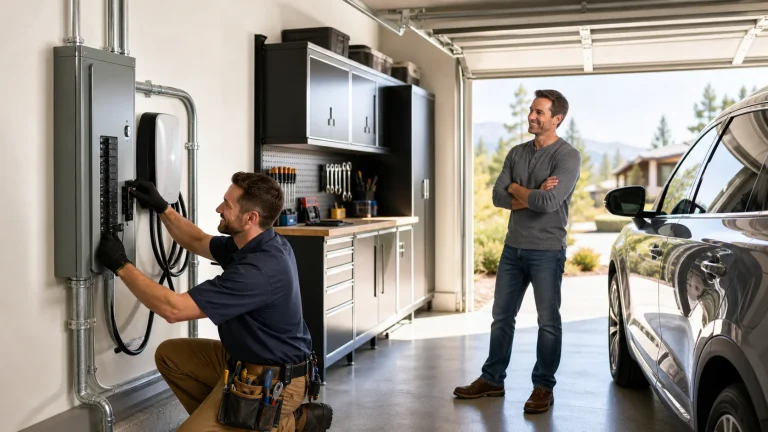
- Give room for future circuits for an EV charger, workshop, or a finished basement
- Improve safety with updated equipment and better grounding
- Work better with whole-home surge protection devices
When the panel is right-sized and in good shape, everything downstream tends to behave better too.
Take Control of Your Home’s Power Quality Today
Flickering lights and voltage dips are not something to ignore. Over time, they can lead to damaged appliances, random shutdowns, and increased fire risk, especially when storms, AC use, and other heavy loads stack up.
If you are seeing these issues, start by writing down what you notice. Note the rooms, the times, the weather, and what was running when things went wrong. That information helps a licensed electrician quickly sort out whether you are dealing with a utility problem, an in-home wiring or panel issue, or a mix of both.
Pink Brick Electric is an owner-operated residential electrician serving Castle Rock, Woodland Park, Colorado Springs, and nearby communities. We help homeowners understand what is really happening with their power quality, from careful troubleshooting to panel evaluations and targeted repairs, so their homes are safer, steadier, and ready for high-demand seasons.
Get Started With Your Project Today
If you are dealing with flickering lights, tripped breakers, or mystery electrical issues, we are ready to help you find a safe and lasting fix. At Pink Brick Electric, our licensed electricians specialize in precise electrical troubleshooting in Castle Rock so you can feel confident about the power in your home or business. Tell us about your project or concern and we will walk you through your best options step by step. Schedule your service today by using our contact us form so we can get you on the calendar quickly.