Stay Safe Before You Dig in Colorado Springs
Any time you put a shovel, auger, or trencher in the ground, you are taking a risk. Fence posts, new patios, sprinkler repairs, landscape beds, even running power for an EV charger or hot tub can all cross paths with underground lines you cannot see.
Under most Colorado Springs yards, you will usually find a mix of buried services like electric service lines, natural gas lines, communication lines like internet and phone, and water and sewer pipes. Many properties also have private electrical lines feeding garages, sheds, lights, and equipment.
If one of those lines is in your way and you hit it, the result can be shock, fire, flooding, or a service outage. That is why every homeowner here needs a clear plan for locating and verifying underground utilities before digging. That means using the 811 process, getting private line locating when needed, and calling in a licensed electrician when the work involves power. We will walk through how 811 works in Colorado, what it covers and what it misses, how underground electrical in Colorado Springs is usually installed, safe digging practices, and when it is time to bring in a pro.
Understanding Underground Utilities on Your Property
In many Colorado Springs neighborhoods, some services run overhead and some run underground. Power may come from a pole to a mast on your roof, or it may come from a pad-mounted transformer in the yard through buried cable to your meter. Gas often runs underground from the street to a meter on the side of your home. Water and sewer usually come in below grade, while cable or fiber might share trench space with other utilities or follow its own path.
On top of that, homeowners often have private lines that are easy to forget about. These can include power to detached garages, barns, or sheds, underground feeds for hot tubs and spas, landscape and path lighting, sprinkler control wires and pump power, and pool or backyard kitchen equipment.
These private lines do not belong to the public utility companies, and they do not always follow straight or obvious paths. They may be in plastic conduit, rigid metal conduit, or direct-burial cable. In some yards, rock and previous grading mean those lines can be much shallower than you would expect.
Even if a line was installed at a proper depth, soil can settle, people can remove or add dirt, and later projects can disturb the original trench. So depth is never something you can count on by guesswork. Hitting underground electrical in Colorado Springs can cause:
- Electric shock or burns
- Arcing and fire risk
- Damage to your own service equipment
- Outages for you and nearby homes
- Repairs that can be very expensive and may not be covered by basic insurance
The only safe approach is to assume something could be there until you have proof that it is not.
How the 811 Utility Locate Process Works in Colorado
Colorado 811 is the starting point before any digging. You can call or submit a request online, but either way you should do it several business days before you plan to dig.
When you submit a request, you will usually be asked for your name and contact info, the property address and nearest cross streets, where on the property you plan to dig, and the type of work you are doing and how deep you expect to go.
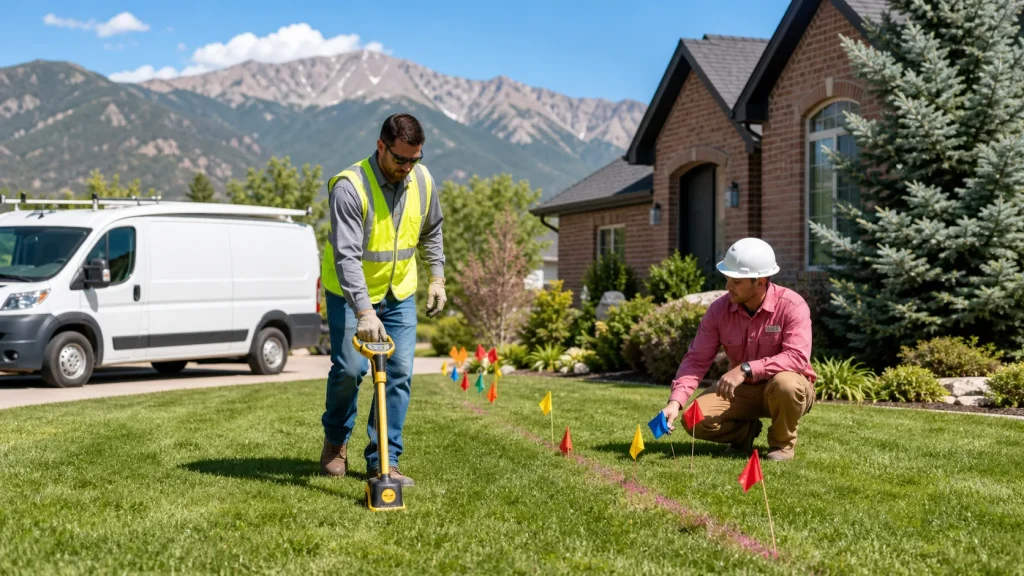
Once your request is in, 811 notifies member utility companies that serve your address. Those utilities send out locators who visit your property, look for their own lines, and mark them on the ground using spray paint and flags. Each type of utility has a standard color, such as:
- Red for electric power
- Yellow for gas, oil, or steam
- Orange for communication lines
- Blue for potable water
- Green for sewer and drain
It is important to know that 811 locators mark only public utility-owned lines. That typically means up to your meter or the service point. Anything past that, including underground runs to a garage, detached building, or yard lighting, is private and usually not covered.
In Colorado Springs, you are expected to call 811 before you dig and to dig in a careful and prudent way around the marks. If you skip 811 and damage a line, you can be held responsible for repairs and any related damage. It also puts you and others in danger, which is never worth the risk.
When You Need Private Line Locating and an Electrician
Private line locating is a separate service that focuses on lines the public utilities do not own, especially underground electrical in Colorado Springs that is part of your home system. This commonly includes:
- Power from your main panel to a detached garage or workshop
- Underground feeds for hot tubs or swim spas
- Cables for landscape lighting and yard features
- Power to well pumps or outbuildings
Many common projects really should include private locating and help from a licensed electrician, such as:
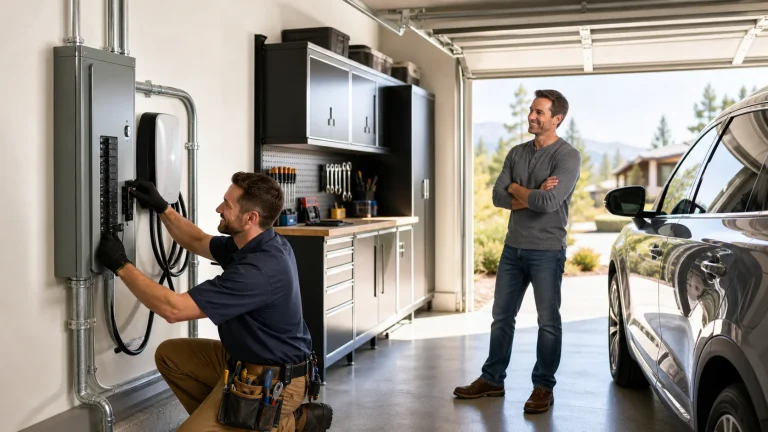
- Adding an EV charger in a detached garage
- Extending power to a new workshop or hobby shed
- Moving or upgrading a hot tub pad
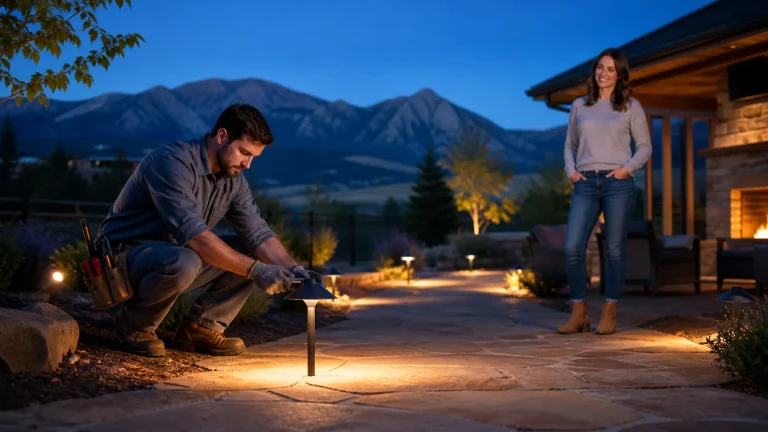
- Installing new outdoor or path lighting with buried cable
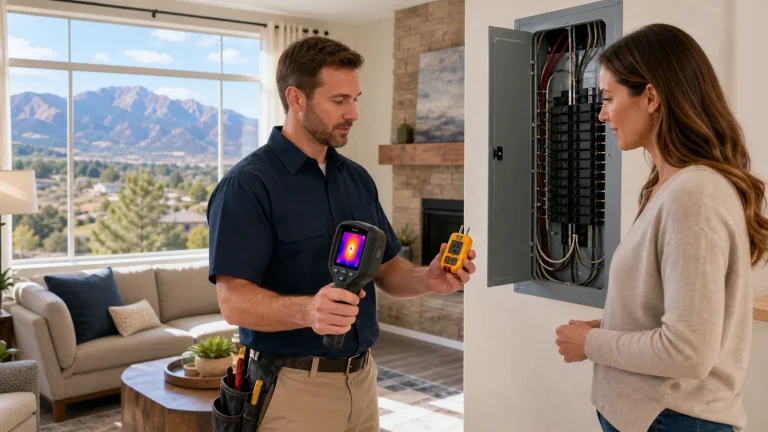
An electrician can walk your property, look at your panel and existing equipment, and make an educated plan for where underground lines are likely to be. We can design new underground runs that meet code, choose the right type of conduit or cable, and work with private locators if needed so the route is safe and documented.
There are also important code and safety details to get right. Those include correct burial depth for different circuit types, using approved conduit and fittings for local soil and weather, GFCI protection where required, and proper grounding and bonding. Those are not things to guess at. A mistake underground can hide for years and then show up as nuisance trips, damage to equipment, or a serious shock hazard.
Safe Digging Depths, Hand Digging, and Working Near Power
Homeowners often ask what depth is safe to dig without a locate. There is no universal safe depth. In Colorado Springs, rocky ground, older work, and yard changes mean utilities can be surprisingly shallow in some spots. The rule should be: do not dig until you have marks, and take extra care near any marked line.
Some safer practices include:
- Respect the tolerance zone on both sides of a mark
- Use hand tools or vacuum excavation when you are close to marks
- Avoid power augers or trenchers until all utilities are clearly located and you are outside the marked areas
When installing or exposing underground electrical in Colorado Springs, best practices often involve:
- Meeting or exceeding minimum burial depths for the circuit type
- Using proper conduit where required, not random pipe or leftover materials
- Placing warning tape above the line when backfilling
- Backfilling with clean material around conduit or cable, then compacting in layers
If you are working in late summer or fall, the soil here can be especially dry and hard. Tools can slip or bounce, which makes it even more important to know what is below and to work slowly near any marks. Shorter daylight hours also make good lighting and clear paint lines important so nothing gets missed at dusk.
Plan Your Project the Smart Way
Before you start any project that breaks ground, it helps to follow a simple plan:
- Submit a locate request with 811
- Wait for all utilities to respond and confirm marks across your dig area
- Arrange private locating for any non-utility lines you suspect
- Walk the site, take photos of marks, and note any odd routing
- Bring in a licensed electrician before digging for or near electrical runs
When underground electrical in Colorado Springs is part of your project, early input from an electrician keeps things on track. We can look at panel capacity, help plan trench routes that avoid conflicts, and factor in permit and inspection needs so the finished work is safe and code-compliant.
At Pink Brick Electric, we focus on residential electrical work for homeowners along the Front Range, including underground wiring projects. Careful planning, proper locating, and professional installation protect your home, your family, and your investment so your new fence, patio, hot tub, or EV charger works the way it should for years to come.
Get Started With Your Project Today
If you are planning new construction or upgrading existing service, we can design and install safe, code-compliant underground electrical in Colorado Springs tailored to your property. At Pink Brick Electric, we walk you through every step so you know exactly what to expect before work begins. Reach out today through our contact page and we will help you schedule a visit and put together a clear, detailed plan for your project.