Avoid Panel Surprises with a Clearly Labeled Home
A clearly labeled electrical panel turns a stressful power outage into a simple chore. When you know which breaker controls each room, you can shut power off on purpose, avoid guessing, and keep your home safer during repairs or emergencies.
As the colder weather moves into the Colorado Springs area, many homes start using more space heaters, holiday lights, and indoor tools. That extra load can push older wiring and panels harder. A good circuit map, made before something goes wrong, helps you handle tripped breakers quickly and avoid risky trial and error.
In this guide, we will walk through simple, no-panel-needed ways to identify and label circuits, the tools that help, and how to turn your notes into clear labels everyone in the house can understand. We will also point out the line between safe homeowner tasks and work that really should wait for a licensed electrician, especially when you might need circuit breaker replacement in Colorado Springs.
Safety First When Tracing Household Circuits
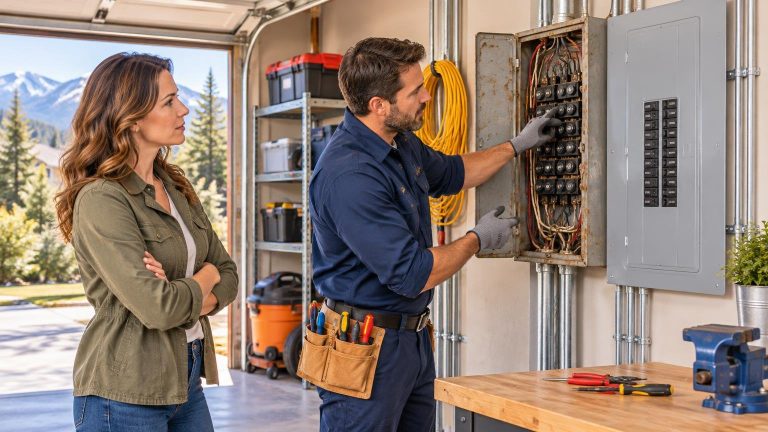
The most important thing to know is what you will not be doing. You will not remove the panel cover, touch bare wires, or work on live parts. That kind of work belongs to a trained, licensed electrician with proper tools and protection.
Things that are generally safe for homeowners include:
- Flipping breaker handles on and off
- Plugging in a lamp, radio, or outlet tester
- Sticking labels or tape on the panel directory
- Writing circuit notes in a notebook
By contrast, some tasks cross into unsafe territory because they can expose you to live parts or damage equipment. Things that are not safe for homeowners include:
- Removing the metal panel cover or dead front
- Working near exposed live wiring of any kind
- Forcing a breaker that feels stuck or odd
- Taking apart outlets, switches, or junction boxes
In our dry, high-elevation climate around Colorado Springs and Monument, static and temperature swings can be hard on older electrical parts. If you notice any warning signs while you are mapping, stop right away:
- A breaker that feels hot or warmer than the rest
- A buzzing, humming, or crackling sound from the panel
- A burnt or sharp electrical smell near the panel or an outlet
Those are warning signs that you might need professional troubleshooting or circuit breaker replacement in Colorado Springs, not more DIY.
You can map most of your home’s circuits with tools you probably already have in a drawer. Here is a basic starter kit:
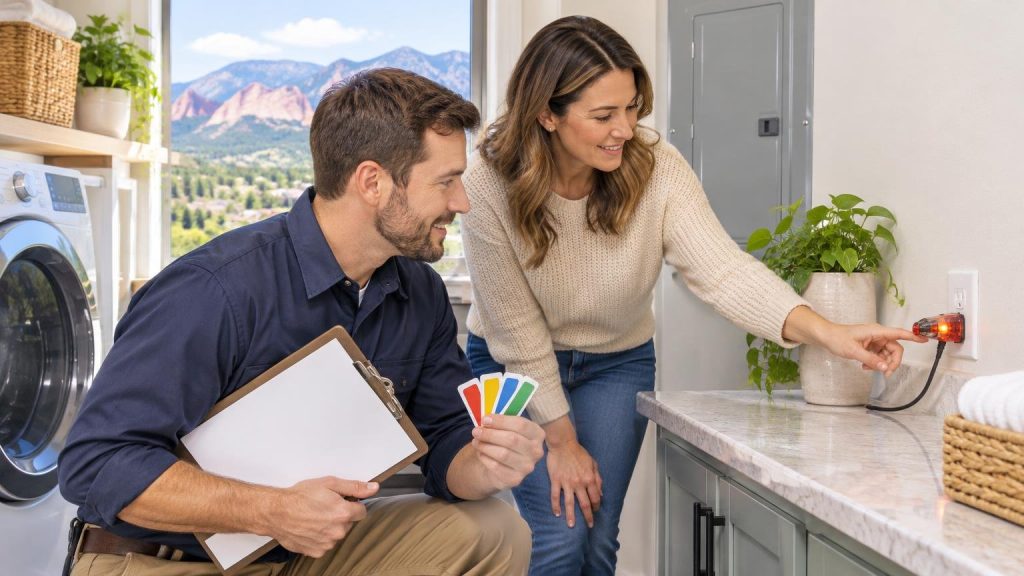
- A small plug-in lamp or radio
- Sticky notes or painter’s tape
- A helper, if someone is available
A few low-cost extras can make the job smoother:
- Plug-in outlet tester, to confirm if an outlet has power
- Non-contact voltage tester, to double check that a switch or outlet is live before you touch it
- Simple homeowner-grade circuit tracer kit, made to plug into outlets and follow that circuit
Each of these items supports a specific part of the process. The lamp or radio gets plugged into outlets so you can quickly see or hear when a circuit turns off. Sticky notes or tape let you mark dead outlets and light fixtures as you test each breaker, and the marker helps you write quick notes on those labels so you do not forget what you found. Your notebook is where you keep a room-by-room list of which breaker controls what, so you can turn field notes into clean panel labels later.
If you choose to buy a circuit tracer, look for one that is labeled for homeowners, not a complex pro-only kit. A simple model that plugs into a standard outlet and has a handheld receiver is usually enough for basic mapping.
Step-by-Step Circuit Mapping You Can Do Today
Start by planning a relaxed time, like a weekend afternoon, when no one needs to cook, work, or watch anything important. Then follow these steps:
- Turn off sensitive items
- Shut down desktop computers properly
- Turn off TVs and gaming systems
- Unplug electronics you do not want to lose power suddenly
- Get some backup light
- Keep a flashlight or battery lantern handy
- Let family members know you will be turning lights on and off
- Work one breaker at a time
- At the panel, pick a breaker you want to map
- Flip the handle firmly to the OFF position
- Do not push on anything else and do not remove covers
- Walk the house and take notes
- Plug your lamp or radio into each outlet in one room at a time
- If it does not turn on, put a sticky note on that outlet and write the breaker number or a simple tag, such as “Bkr 7”
- Try light switches, ceiling lights, and fans and mark those too
- In your notebook, write the breaker tag and list every outlet, light, and device that lost power
- Watch for odd pairings
- You may find a garage outlet on the same breaker as a basement light
- You might see living room lights sharing with a front porch outlet
- These surprises are common in older Colorado Springs homes or in spaces that were finished after the original build
- Turn the breaker back on
- Return to the panel and switch that same breaker ON
- Confirm your lamp or radio now works at one of the outlets you just marked
- Only then move on to the next breaker
Repeat this process for each breaker you can safely test. If you hit a breaker that shuts off the furnace, fridge, or other major appliance, make a big note in your notebook and panel directory so you can find it quickly later, but turn it back on as soon as you identify it.
These notes are very helpful for a licensed electrician too. If we see that your garage, basement, and outdoor outlets all crowd onto one breaker, we have a head start when planning safer upgrades or talking about circuit breaker replacement in Colorado Springs.
Turning Your Circuit Notes Into Clear, Lasting Labels
Once your notes are complete, it is time to turn them into labels that make sense to any adult in the house. Clear labels are short, but they tell you exactly what will shut off.
Aim for simple, plain language such as:
- “Kitchen Counter Outlets Left Wall”
- “LR Lights And North Wall Outlets”
- “BR1 Outlets And Closet Light”
- “Garage GFCI And Outside Front Outlet”
Avoid vague labels like “Lights” or “Outlets” by themselves. If your panel door already has a printed directory, you can neatly fill it in. If it is a mess or hard to read, tape in a fresh, clearly written chart next to it.
A few tips make labels easier to use:
- Use the same abbreviations throughout, such as BR1, BR2, LR, DR
- Write in dark ink that is easy to read under a flashlight
- Group related areas on the chart, such as all kitchen circuits together
Keep a copy of your circuit map in two places:
- In a folder with your house documents
- In a shared digital note so family members can pull it up on a phone during an outage
Update your labels and notes any time you add a new appliance, finish a basement, or have electrical work done. A quick revision now keeps you from guessing later.
Know When DIY Stops and a Pro Should Take Over
Even with careful mapping, some problems are not safe to handle on your own. Stop your DIY work and call a licensed electrician if you notice:
- Breakers that trip often, especially with normal use
- A breaker that will not reset or immediately trips again
- Scorch marks, melted areas, or dark staining on outlets or the panel
- Lights that flicker in more than one room at the same time
- A panel that hums, clicks, or feels warm to the touch
Older homes in Colorado Springs and Monument can also show signs that the system is outdated or overloaded, such as:
- No dedicated circuits for kitchen counters or bathrooms
- Every breaker space filled, with no room for new ones
- A panel brand or style known for reliability concerns
- Frequent need to unplug items so a breaker will stay on
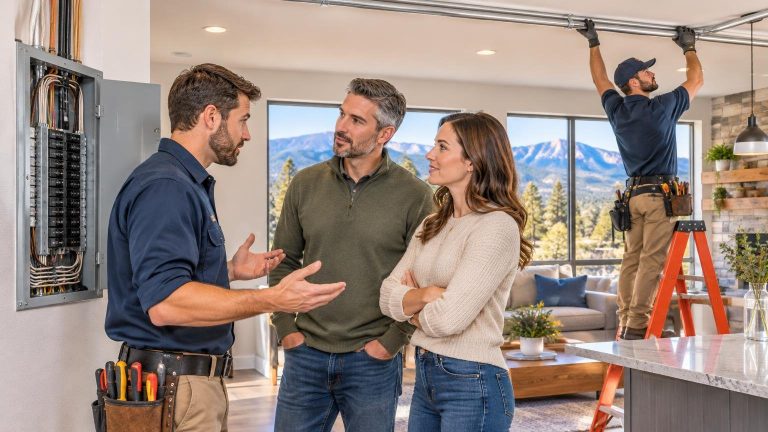
If your mapping work points to crowded circuits, repeated trips, or mystery breakers that do not seem to control anything, that is useful information to share with a professional. A licensed electrician, like our team at Pink Brick Electric, can use your circuit map to check for hidden issues, talk through safer options, and decide if repairs, new circuits, or circuit breaker replacement in Colorado Springs make sense for your home.
Get Started With Your Project Today
If you are seeing tripped breakers, flickering lights, or other warning signs, we are ready to help you restore safe, reliable power. Learn more about our
circuit breaker replacement in Colorado Springs and related electrical services to see what fits your home’s needs. At Pink Brick Electric, we take the time to explain your options clearly so you can make confident decisions. Reach out through our
contact page and we will schedule a convenient time to assess your system.
Want a professional to look at it? See our electrical panel upgrades. Homeowners in Colorado Springs can also see our electrician in Colorado Springs, CO page.